
Why We See Land Differently: The Dual Income Land Investment Model
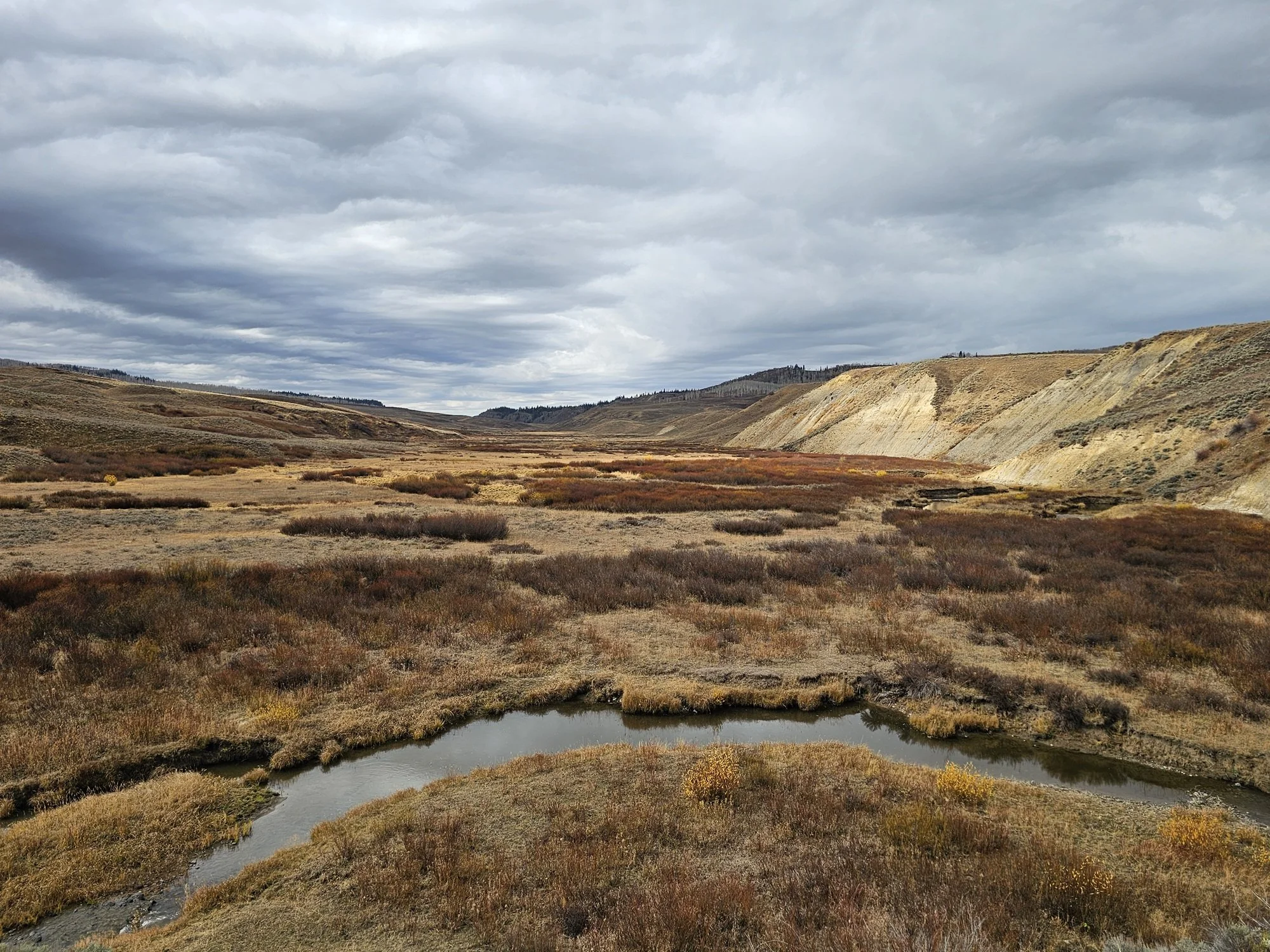
What happens when a builder and an ecologist look at the same piece of land and both see opportunity. An introduction to the dual income model and the philosophy behind it.
Most people look at a wetland running through a property and see a problem. A floodplain eating into the buildable area. A creek nobody wants to deal with. Obstacles. Delays. Cost.
We used to see it the same way. Then we started evaluating land together, one of us trained to build, the other trained to restore, and the picture changed. What looked like a setback was often a mitigation bank waiting to be established, or a natural area residents would value. What looked like a yield killer was conservation credit income that didn't depend on the housing market, interest rates, or Wall Street earnings reports.
That shift in thinking is what Land Equity Partners is built on.
What We Actually Believe About Land
We call our philosophy conscious stewardship: the intentional management of land, resources, wealth, and influence according to one's moral principles, with a commitment to leaving people, communities, and the natural world better than they were found. The intent is to align development with conservation, and to reconnect people with land.
For every property we evaluate, we ask two questions. What are this land's intrinsic resources? What can it produce? The answers shape the vision and the deal structure. Some projects lean hard into development. Some lean into conservation. Most sit somewhere in between.
How the Model Works: Two Income Streams, One Property
We find land with both development potential and conservation value, then build two independent income streams on the same property, or within the same portfolio. We cover this selection process in more detail on The Model.
One stream is development: market-rate residential, multifamily, and commercial, executed as holds or flips depending on market conditions.
The other stream is conservation: wetland mitigation banks, stream credits, and conservation credit instruments. These are sold to developers, cities, counties, and transportation agencies that are legally required to buy them before disturbing regulated land, a requirement the Clean Water Act of 1972 put in place and that remains today.
Neither stream depends on the other to work.
Why This Structure Acts as a Hedge
Development is cyclical. When rates rise, demand softens. When the economy slows, buyers wait.
Conservation credit demand doesn't move the same way. Buyers aren't making discretionary purchases. They're satisfying permit conditions. When a city needs to build a road through a wetland, it has to buy mitigation credits, regardless of what the Fed just did.
The two timelines also tend to offset each other. A market-rate development project often reaches the market faster than a conservation deal reaches full distribution. When that happens, the earlier cash event strengthens the portfolio's return profile while the longer-running conservation income carries it forward after the development cycle closes.
Before committing to any property, we run it through three filters:
Market: Is there active buyer demand for credits in this area?
Makeup: Does the land's ecology actually qualify for credit generation?
Policy: What does the regulatory environment look like at the federal, state, and local level?
All three have to align. Most properties don't clear that screen. The ones that do start with a structural advantage most investment deals simply don't have.
Who Buys Conservation Credits, and Why
Conservation credit demand isn't charitable. It's a legal requirement, and the buyer pool includes:
Private developers building on regulated land
Cities and counties managing infrastructure and growth
Departments of Transportation expanding roads
Department of Defense installations with land disturbance requirements
These are institutions satisfying permit conditions, not donors. And the mitigation bank generating those credits isn't just a financial instrument. It's an actively restored piece of land, floodplain wetlands, stream corridors, protected species habitat. The buyer satisfies a permit condition. The land gets healthier. The investor gets a return.
Who This Model Is For
This model is built for three groups.
Accredited investors evaluating real estate alternatives who want to understand how a dual income land investment actually works before deciding anything.
Landowners across Florida, Georgia, the Carolinas, Texas, Alabama, and Colorado who have priced their land on development value alone, and may be sitting on conservation or mitigation income they've never counted.
Industry professionals who work with developers and landowners and want to expand their footprint by partnering with us.
See How the Model Works
We work with a focused group of investors and landowners. If you want to understand what current opportunities look like, or whether your land qualifies, reach out. Or join us at an upcoming webinar to see the model walked through live.
No pressure. No pitch. Just a real conversation about whether there is a fit.
Frequently Asked Questions
1. What is the dual income land investment model?
A model where a single property, or portfolio, generates two independent income streams: market-rate development returns and conservation credit income, neither dependent on the other.
2. What is conscious stewardship?
Land Equity Partners' guiding philosophy: the intentional management of land, resources, wealth, and influence according to one's moral principles, with a commitment to leaving people, communities, and the natural world better than they were found.
3. What three filters does Land Equity Partners use to evaluate a property?
Market (active buyer demand for credits in the area), Makeup (whether the land's ecology qualifies for credit generation), and Policy (the applicable federal, state, and local regulatory environment).
4. Why does conservation credit income act as a hedge against market cycles?
Because conservation credit buyers are satisfying legal permit conditions, not making discretionary purchases. That demand doesn't disappear when interest rates rise or the economy slows, the way development demand can.
5. Who is legally required to buy conservation and mitigation credits?
Private developers building on regulated land, cities and counties managing infrastructure and growth, state Departments of Transportation, and Department of Defense installations with land disturbance requirements.
6. Can development and conservation income come from the same property?
Yes. The two income streams can run on the same property or within the same portfolio, and neither needs the other to work.
7. Who is the dual income land investment model designed for?
Three groups: accredited investors evaluating real estate alternatives, landowners who may be undervaluing their land's conservation potential, and industry professionals looking to partner with Land Equity Partners.