
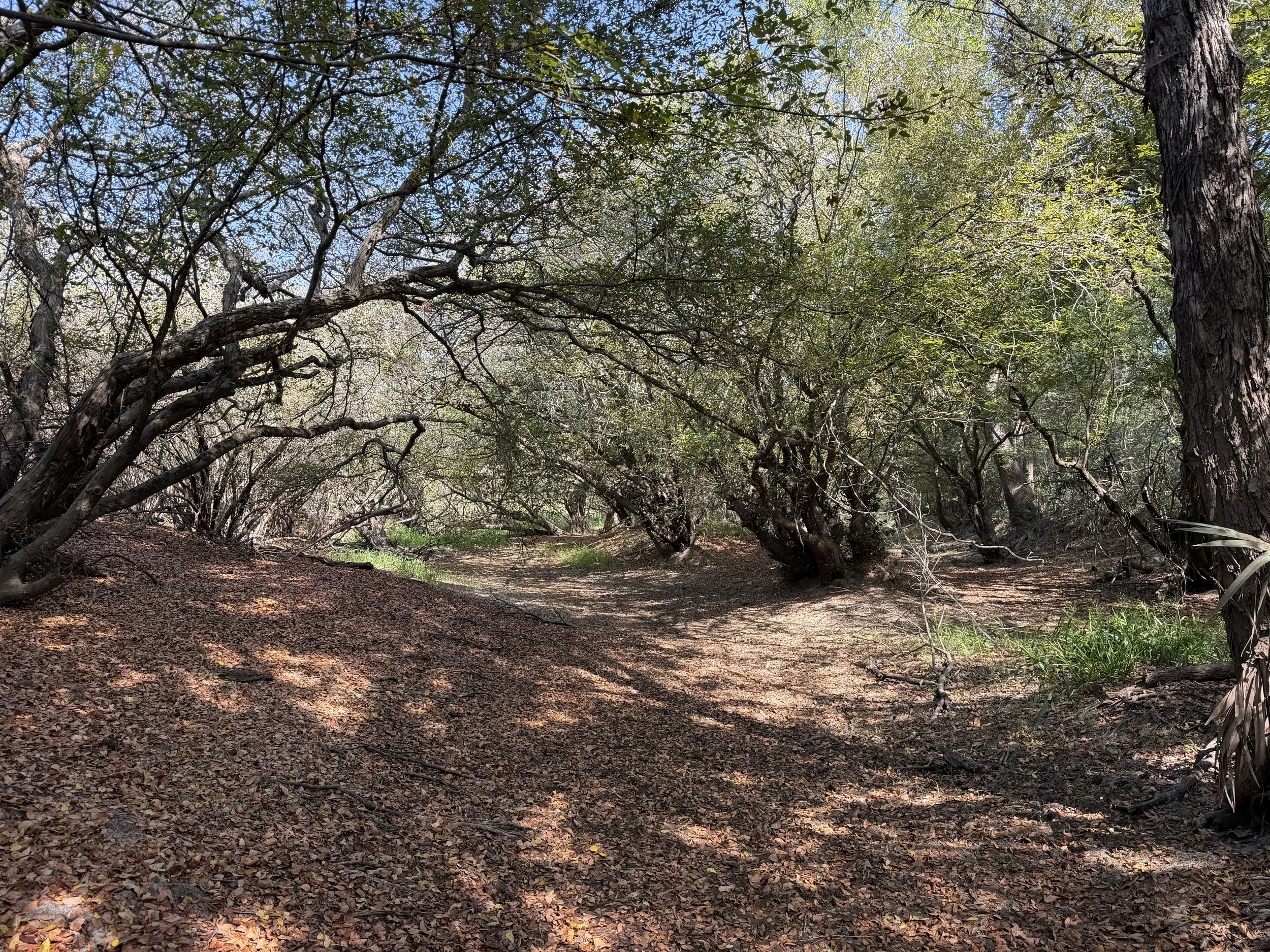
Photo taken from land LEP is considering for investment.
A conservation easement offer can be attractive: a payment or tax benefit in exchange for protecting land you already value. That figure, however, reflects only one way your property can serve conservation. Before you record a permanent restriction, compare it with a conservation easement alternative such as a wetland mitigation bank, a stream mitigation bank, or a protected species recipient site.
Over the years, we have met many landowners who were ready to sign before anyone had valued their property's other conservation and land-use options. Once a perpetual easement is recorded, that comparison usually comes too late. Our For Landowners page explains how we evaluate every acre before any decision is made.
What Does a Conservation Easement Restrict?
A conservation easement is a recorded agreement that limits specified uses of land to protect identified natural resources. It typically binds future owners according to its terms and may last for a fixed period or, in many cases, in perpetuity.
No two easements are identical. Depending on the conservation purpose and the negotiated document, reserved rights may include farming, timber management, hunting, limited structures, roads, utilities, or restoration work.
Duration and economic effect vary as well. Some state programs use time-limited covenants that lower taxable value while agricultural land remains in an eligible use. Easements donated for a federal charitable deduction or sold as development rights are commonly perpetual. Review the actual easement language with qualified counsel rather than relying on a program's general label.
Why Is the Easement Offer Only Part of the Picture?
Easements are recommended by a wide range of sponsors, including land trusts, conservation groups, state agencies, government programs, and other organizations seeking long-term protection of a property. The sponsor is typically acting appropriately and in good faith. Its recommendation will still naturally reflect its own mission, expertise, and objectives.
A tax advisor may focus on the requirements for a charitable contribution. A land trust may prioritize a particular watershed, while a conservation group may focus on a single species and its habitat. Each perspective has value, yet none is designed to answer the landowner's broader question: is this transaction the best use of the property's rights and ecological assets?
When only one conservation tool is presented, the alternatives are never valued or compared. A restrictive easement can affect development rights, financing, estate plans, land-use flexibility, and eligibility for future mitigation or protected species programs.
What Conservation Easement Alternatives Should Landowners Consider?
Wetlands, streams, uplands, and protected species habitat can hold economic value apart from conventional development or a one-time easement payment. Depending on the property and the regulations that apply, options may include:
• Wetland or stream mitigation bank. With regulatory approval, restored and protected wetlands or streams can generate credits that permitted projects purchase to offset their impacts within the bank's service area. Our model explains how this conservation credit income works alongside development.
• Species conservation bank. Qualifying protected species habitat may generate conservation value under its own regulatory framework.
• Gopher tortoise recipient site. In Florida, eligible landowners may charge fees to accept tortoises relocated from permitted development sites. We explain this framework in Gopher Tortoise Recipient Sites: How Longleaf Pine Restoration Generates Conservation Credit Income.
• Conservation and development on the same property. Suitable uplands can support development while sensitive acres are restored and protected, an approach we outline in our article on the dual income land investment model.
These programs follow different rules and are not interchangeable. Each depends on location, resource type, regulatory framework, and market demand.
Can a Conservation Easement and a Mitigation Bank Exist on the Same Land?
Often, yes. A conservation easement is frequently part of the long-term site protection that a mitigation bank or other conservation project requires. The risk lies in sequence: recording an easement before the property's alternative uses are studied and before the rights a future program would need are understood and reserved.
An easement's terms can limit restoration, habitat management, access, or compatible infrastructure. They can also reduce the additional ecological benefit a regulator is able to recognize and affect valuation, financing, or a future program's site protection requirements.
Answer these questions before the easement is recorded. Once a perpetual restriction is in place, a missed opportunity may not be recoverable.
How Should You Weigh Easement Compensation Against What You Surrender?
Compensation may take the form of a direct payment for the easement or development rights. It may also take the form of a potential federal income tax deduction for donating a qualified easement. That deduction is subject to the Internal Revenue Code, appraisal requirements, and other eligibility rules, and state tax treatment varies.
In either case, compare the headline payment or projected tax benefit with:
• The property's value after the restriction is recorded
• The development and land-use rights being surrendered
• Effects on financing, marketability, and family or estate plans
• Retained uses and ongoing management obligations
• Conservation income opportunities that could be limited or lost
The IRS has devoted substantial enforcement attention to abusive and overvalued conservation easement transactions, particularly certain syndicated structures. Legitimate easements remain valid tools, and that scrutiny makes independent, property-specific valuation and qualified legal and tax advice all the more important.
Which Questions Should Come Before Any Permanent Restriction?
Before recommending a permanent conservation structure, Land Equity Partners asks three questions:
1. What are the landowner's goals and objectives?
2. What ecological and development resources does the property contain?
3. Which feasible strategy offers the best combination of financial value, conservation outcome, flexibility, and acceptable risk?
The answers may support the easement originally offered. They may also point toward a purchased easement, a mitigation bank, a protected species conservation or recipient site, a conservation-development plan, or a combination of tools. This framework reflects conscious stewardship, the foundation of our business model.
Is a Conservation Easement Alternative Right for Your Property?
Not every property qualifies, and no conservation program guarantees income. A credible comparison accounts for resource type, jurisdiction, service area, baseline condition, restoration potential, market demand, permitting risk, cost, timing, and long-term management duties.
Demand for mitigation credits and relocation services rises and falls with permitted impacts, infrastructure and public projects, credit availability, and regulatory policy. Projected revenue should be assessed realistically and weighed against permitting expense, timing, and risk.
Conservation easements are legitimate and often highly effective tools. The goal is an informed choice based on the property's full conservation potential and the opportunity cost of a specific restriction. Our team has permitted more than a dozen mitigation banks, and our portfolio shows how that experience applies to real properties.
The same conservation credit markets support the model we offer accredited investors, and we collaborate with development and conservation partners who bring complementary expertise. To go deeper, join an upcoming session on our Webinars & Events page or subscribe to The Hedge newsletter.
The land has more value than anyone has shown you.
Conservation Easement Alternatives: Frequently Asked Questions
What is a conservation easement alternative?
A conservation easement alternative is any strategy that protects land or realizes its conservation value without relying solely on a stand-alone easement payment or tax benefit. Examples include wetland and stream mitigation banks, species conservation banks, gopher tortoise recipient sites in Florida, and plans that combine development with conservation on the same property.
Can a property with a conservation easement still generate mitigation credits?
It depends on the timing and the easement's terms. An easement is often part of a mitigation bank's required site protection, but an easement recorded first may restrict the restoration, management, or access a future bank would need.
Is a conservation easement permanent?
Many are. Easements donated for a federal charitable deduction or sold as development rights are commonly perpetual and bind future owners, while some state programs use time-limited covenants. The recorded document controls, so it should be reviewed with qualified counsel.
What is a wetland mitigation bank?
A wetland mitigation bank is a site where wetlands are restored and permanently protected to generate credits. Once approved through the U.S. Army Corps of Engineers and state agencies, those credits are sold to developers and government agencies required to offset their impacts within the bank's geographic service area.
What is a gopher tortoise recipient site?
A gopher tortoise recipient site is land permitted under a Florida framework to receive tortoises relocated from permitted development sites. Eligible landowners may charge fees for accepting the relocated tortoises.
Does every property qualify for conservation credit income?
No. Eligibility depends on resource type, location, service area, baseline condition, restoration potential, market demand, and permitting risk. A property-specific evaluation is the only reliable way to know.
Do I have to sell my land to work with Land Equity Partners?
Not necessarily. Depending on the property and your goals, Land Equity Partners can structure an outright acquisition, a joint venture in which you retain equity, or a mitigation bank partnership in which you participate in the credit revenue. Tell us about your property to learn which structure fits.
Know Your Options Before You Commit Your Land
No pressure. No pitch. Just a real conversation about whether there is a fit.
CTA Button: Tell Us About Your Land (https://www.land-equity.co/contact)
Important: Every landowner's tax, estate, title, financial, and regulatory situation is different. This article provides general information and is not tax, legal, appraisal, financial, or regulatory advice. Land Equity Partners and its partners are not attorneys and do not provide legal or tax advice. Before accepting payment, claiming tax benefits, or proceeding with any conservation easement that has tax implications, landowners should consult qualified legal counsel, tax and appraisal professionals, and the agencies governing any conservation program under consideration.